Case Study — Maxa
Maxa — helping finance teams make better decisions.
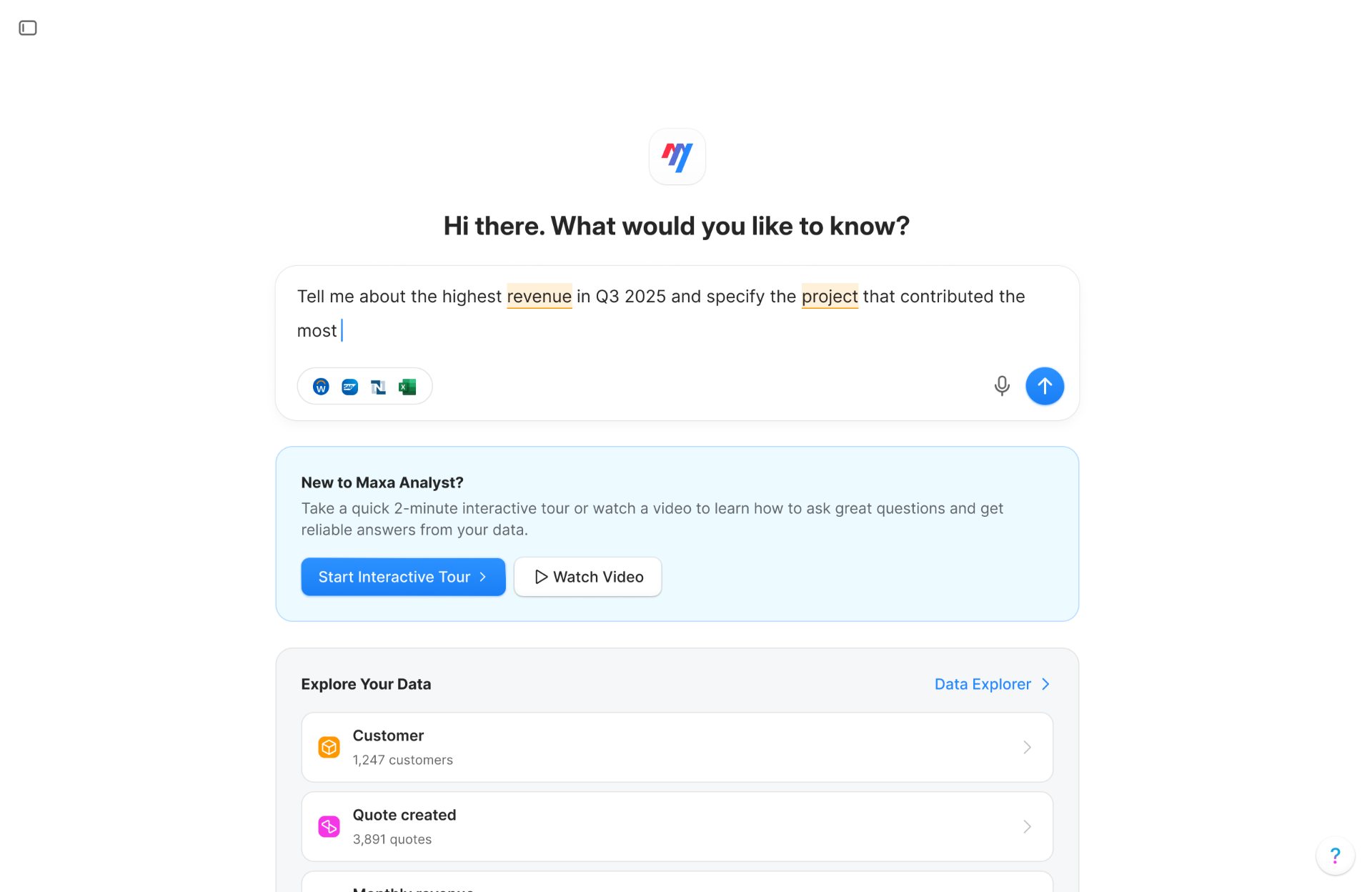
Maxa is an AI-powered analytics platform for finance and operations teams working across ERP systems and other business platforms. The work spanned product design, the AI assistant, onboarding, data exploration, the design system, and brand evolution, making complex operational data accessible through AI-assisted experiences, not just another dashboard.
- Role
- Lead Designer
- Timeline
- 2024–2025
- Industry
- Enterprise Analytics & AI
- Focus
- Product — AI — Design System
My Role
Led design across product experience, AI workflows, onboarding, design systems, and brand evolution.
- — Led a small design team.
- — Partnered closely with product, engineering, and leadership.
- — Guided the transition from traditional analytics to AI-assisted workflows.
- — Defined the experience strategy for the AI assistant and Data Explorer.
- — Contributed across product, design system, and brand.
01
Helping users understand their business.
Most organizations already have access to enormous amounts of operational and financial data. The challenge is rarely access, it is understanding. Finance and operations teams routinely move between multiple systems, reports, dashboards, and spreadsheets to answer relatively simple business questions.
Much of the work focused on reducing that complexity: shortening the path from question to answer, and giving users a more direct way to interrogate their own business without first becoming experts in how the underlying data was modeled.
02
AI onboarding.
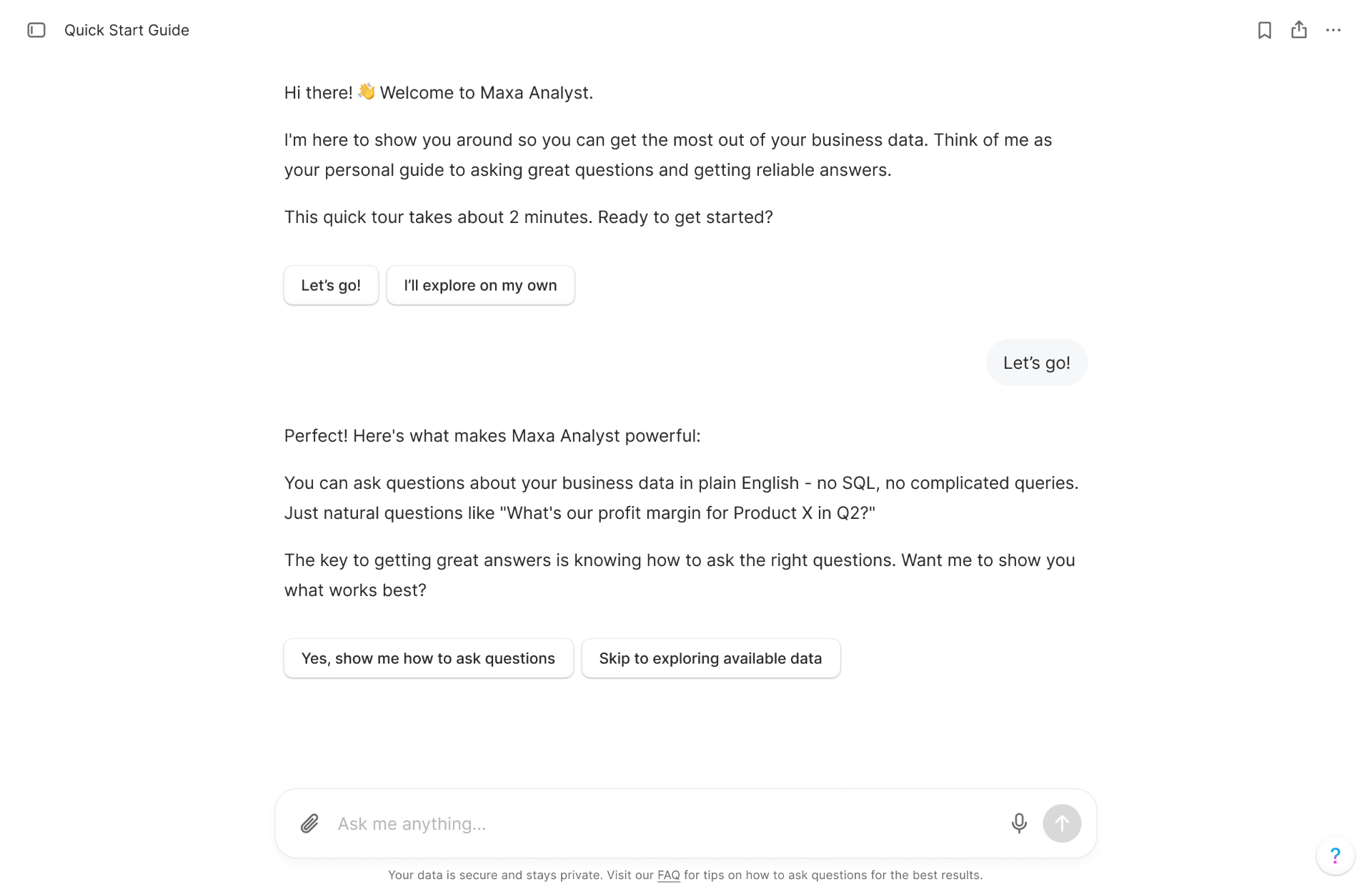
One of the earliest problems I worked on was how to introduce users to the AI assistant. Many AI products assume people already know how to interact with a conversational system. In practice, that is rarely true. Users arrive with different expectations, varying levels of technical fluency, and different mental models for how an assistant should behave.
Rather than treating onboarding as a product tour, I designed it around guided interactions tied to real business questions and the customer's own data. The goal was to help users understand not only what the assistant could do, but when it was useful and how it fit into the work they were already doing.
03
The AI assistant in context.
The assistant was one capability within a broader platform, not the entire product. I designed it to behave that way, with source attribution, transparent reasoning, and clear handoffs into governed data, so an AI-generated answer could be reviewed with the same rigor as a hand-written query.
Framed this way, AI became a way to reach understanding faster rather than a replacement for analysis. The same people who needed to defend a number in a board meeting could trace how it was produced.
04
The Data Explorer.
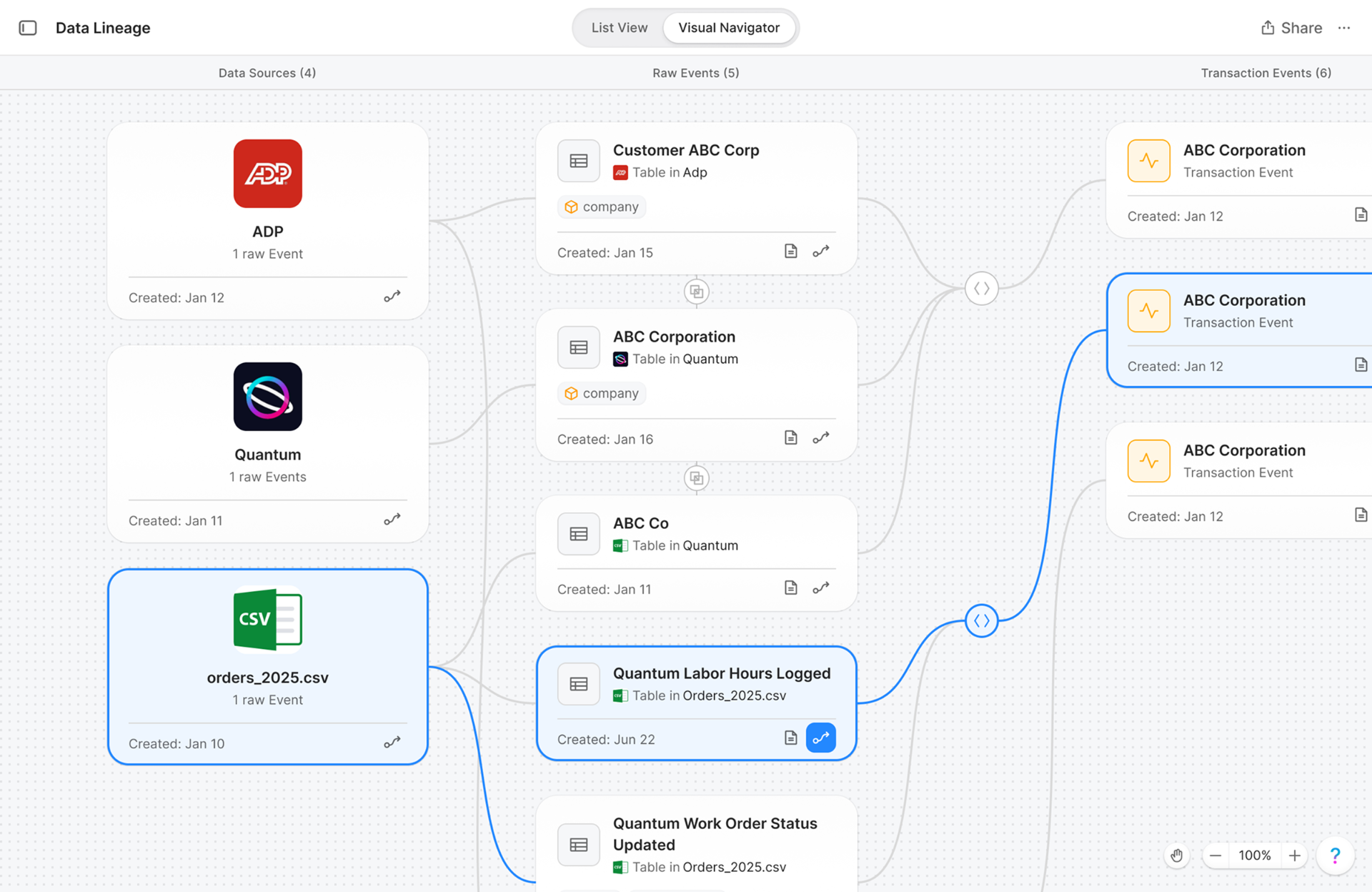
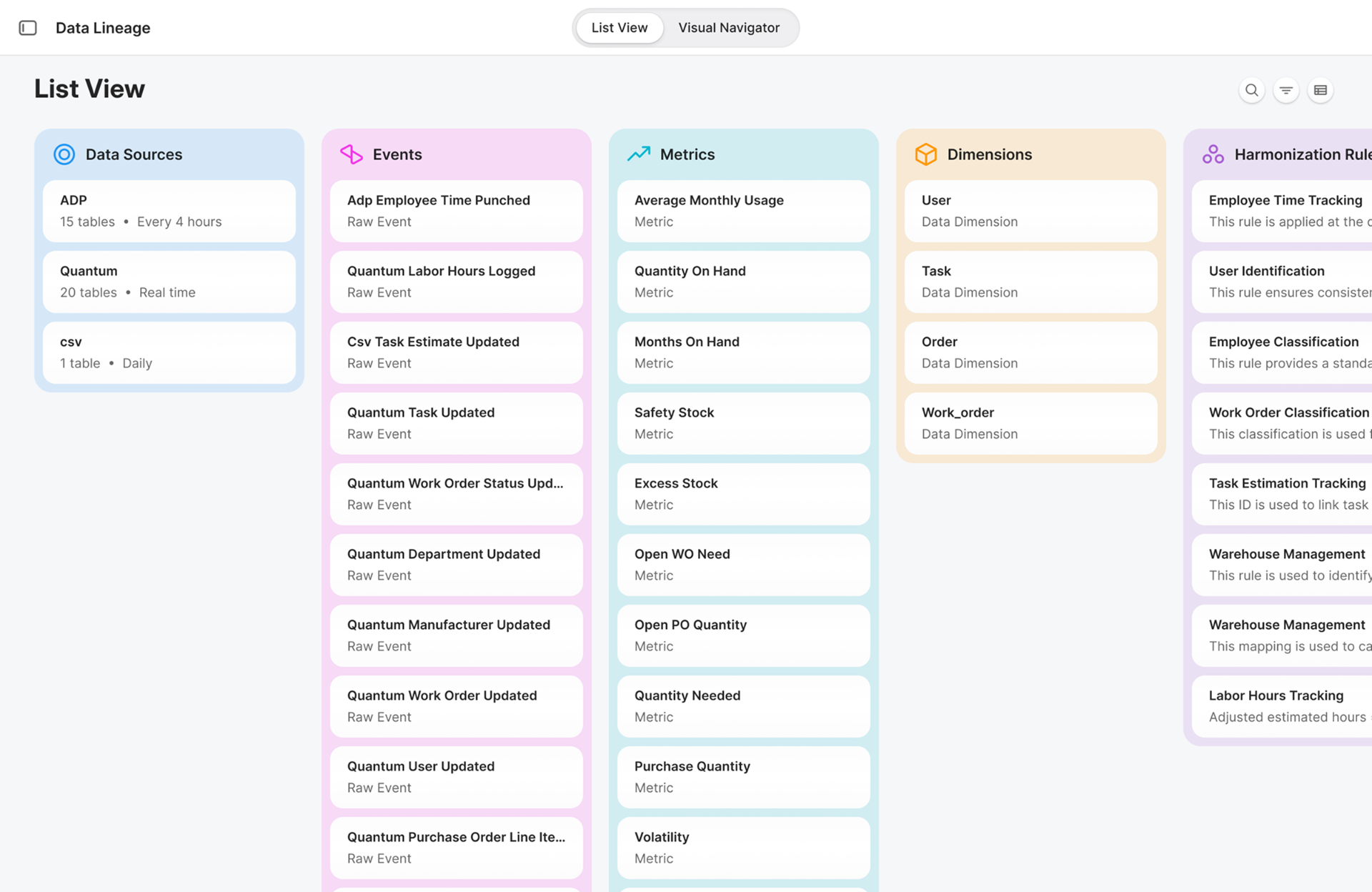
The Data Explorer came out of a related observation: users often knew the question they wanted answered, but not where the underlying information lived. Drawing on Object-Oriented UX, I structured the experience around business entities, customers, products, revenue, transactions, operations , rather than technical schemas.
Entity-first navigation made complex data easier to explore and created stronger connections between analytics, reporting, and AI-assisted workflows. The same model that grounded the assistant grounded the explorer.
05
Design system and brand.
As Maxa expanded, consistency across product, AI, and marketing became increasingly important. I established the company's first design system, components, patterns, visual language, and data visualization standards, as a shared foundation a small team could ship against.
The work extended into brand evolution, so the product and the company read as one coherent thing rather than two parallel efforts.
Impact
Adoption, maturity, and recognition.
- — Supported adoption among enterprise customers
- — Contributed to product maturity during Series A growth
- — Helped establish Maxa as a credible enterprise analytics platform
- — Contributed to recognition including the Snowflake Data Driver Award
Reflection
Understanding over data.
My time at Maxa reinforced something I have observed repeatedly across enterprise work. People rarely want more data. They want a clearer sense of what it means and what it suggests they should do next.
Most of the decisions we made, in analytics, in onboarding, in the assistant, in the system that connected them, were attempts to make that understanding easier to reach.
Next case
UKG Pro — designing a home that adapts to work.